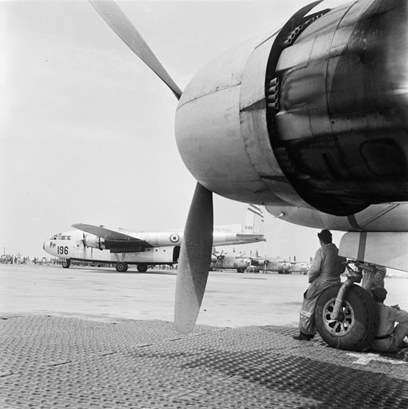
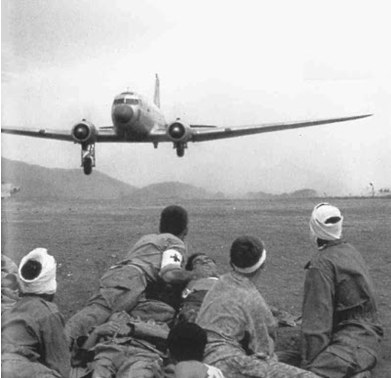
When the battle opened, the French airlift connecting Điện Biên Phủ with Hà Nội and Hải Phòng was running at full capacity. Every day, nearly 100 Dakota DC-3 transport aircraft jostled to land on the tiny Mường Thanh airfield to deliver between 200 and 300 tons of supplies. In addition, 30 large C-119 transport aircraft parachuted in an additional 100 to 150 tons of supplies20.
Khi trận đánh mở màn, cầu hàng không của quân Pháp nối Điện Biên Phủ với Hà Nội và Hải Phòng đã chạy hết công suất. Mỗi ngày có gần 100 máy bay vận tải Dacota DC3 chen chúc nhau hạ cánh xuống sân bay Mường Thanh nhỏ bé để vận chuyển từ 200 đến 300 tấn hàng tiếp tế. Ngoài ra, còn 30 máy bay vận tải lớn C-119 thả dù tiếp tế thêm 100 đến 150 tấn hàng20.
Thanks to these immense efforts, the French troops in Điện Biên had a logistical reserve of 9 days of food and provisions; 8 days of fuel, 27,400 105 mm artillery shells, 2,700 155 mm artillery shells, 22,000 mortar rounds, and 9 units of fire for the tanks' 75 mm guns. Compared to French logistics, the Vietnamese reserves were much weaker. There were 5,000 105 mm artillery shells, 2,000 120 mm mortar rounds, and 3,000 75 mm artillery shells. Because there was very little artillery ammunition, it was stockpiled and used very sparingly; as for food, with the daily ration of the Vietnamese troops being 800 grams of food per day, there were almost no reserves, and it had to be continuously transported day by day24.
Nhờ những nỗ lực to lớn trên, quân Pháp ở Điện Biên có dự trữ hậu cần là 9 ngày lương thực, thực phẩm; 8 ngày nhiên liệu, 27.400 viên đạn pháo 105mm, 2.700 đạn pháo 155mm, 22000 đạn cối, 9 cơ số hoả lực cho pháo 75mm của xe tăng. So với hậu cần của Pháp thì phía Việt Nam, dự trữ yếu hơn rất nhiều. đạn pháo 105mmm có 5000 viên, đạn cối 120mm có 2000 viên, đạn pháo 75mm có 3000 viên. Vì có rất ít đạn pháo nên đều dự trữ và dùng rất dè sẻn, riêng lương thực với khẩu phần ăn của bộ đội Việt Nam là 800 lương thực/ngày, thì gần như không có dự trữ mà phải vận chuyển liên tục từng ngày24.
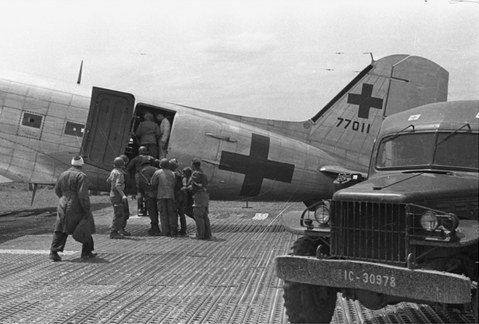
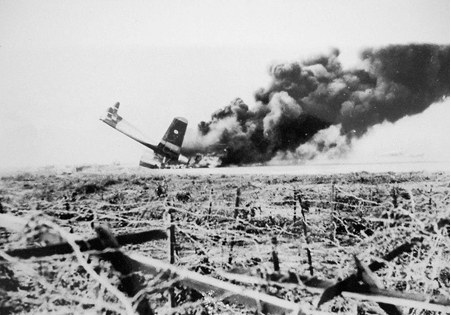
While the French air force concentrated its aircraft to fiercely bomb the road-building forces of the Vietnamese troops in the provinces surrounding Điện Biên, the Vietnam People's Army raided the key traffic hubs serving Điện Biên Phủ in the French rear on the Red River Delta. In the first three months of 1953, guerrillas and local troops damaged 35 locomotives, 340 train cars, and more than 100 tanks and other motorized vehicles on the Hải Phòng - Hà Nội railway, destroying and paralyzing transport on Route 5 for a whole week in mid-March. In two consecutive battles in early March 1954, both Cát Bi and Gia Lâm airfields were raided; nearly 80 aircraft were destroyed, including B.26 bombers and C.47 transport aircraft newly provided as aid by the US34.
Trong lúc không quân Pháp tập trung máy bay oanh tạc quyết liệt lực lượng làm đường của bộ đội Việt Nam ở các tỉnh ven Điện Biên thì quân đội Nhân dân Việt Nam đã tập kích vào các trọng điểm giao thông phục vụ Điện Biên Phủ ở hậu phương quân Pháp trên đồng bằng Sông Hồng. Ba tháng đầu năm 1953, du kích và bộ đội địa phương đã đánh hỏng 35 đầu máy xe lửa, 340 toa tầu cùng hơn 100 xe tăng và xe cơ giới khác trên quãng đường sắt Hải Phòng - Hà Nội, phá hoại và làm tê liệt vận chuyển trên đường 5 suốt một tuần lễ giữa tháng 3. Trong hai trận đánh liên tiếp đầu tháng 3 năm 1954, cả hai sân bay Cát Bi và Gia Lâm bị tập kích, gần 80 máy bay bị phá huỷ, trong đó có cả máy bay ném bom B.26 và máy bay vận tải C.47 mới được Mỹ viện trợ34.
As the opening battle of the historic Điện Biên Phủ campaign began in the Northern Sub-Sector, the logistical war for both sides also became extremely fierce. On the morning of March 13, 1954, two 75 mm mountain artillery companies, merely test-firing to adjust their aim, set ablaze 2 transport aircraft and 2 fighter jets at the airfield. The base's flight dispatch agency sent a telegram back to Hà Nội: "landing at the airfield is prohibited," signaling the risk of severing the two-way airlift with Điện Biên Phủ24.
Khi trận đánh mở màn chiến dịch lịch sử Điện Biên Phủ bắt đầu từ phân khu Bắc, thì cuộc chiến hậu cần với cả hai bên cũng trở nên rất quyết liệt. Sáng ngày 13 tháng 3 năm 1954, hai đại đội sơn pháo 75mm mới thử bắn hiệu chỉnh đã bắn cháy 2 máy bay vận tải, 2 máy bay tiêm kích trên sân bay. Cơ quan điều độ bay của căn cứ gửi điện về Hà Nội: “cấm hạ cánh xuống sân bay” báo hiệu nguy cơ cắt đứt cầu hàng không hai chiều với Điện Biên Phủ24.
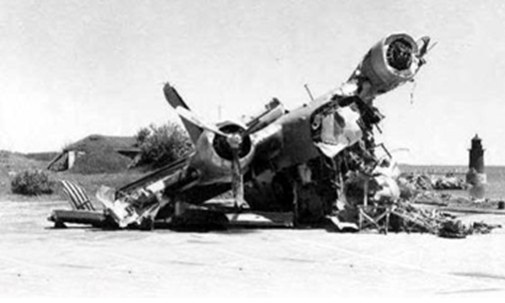
After the first three days of fighting, the French troops at Điện Biên Phủ had consumed nearly half of their ammunition reserves (12,600 105 mm artillery shells, 10,000 120 mm mortar rounds, 3,000 155 mm artillery shells); 11 120 mm mortars were destroyed and 4 105 mm and 155 mm artillery pieces were damaged and in need of repair, not to mention other essential supplies. Having lost the Him Lam and Độc Lập strongpoints, the trenches of the Vietnam People's Army pressed closer to the Central Sector; aircraft had to land with extreme difficulty only at night to evacuate the wounded and deliver goods, and the medical bunkers quickly became overloaded.
Sau ba ngày chiến đấu đầu tiên, quân Pháp ở Điện Biên Phủ đã tiêu thụ gần nửa dự trữ đạn dược (12.600 đạn pháo 105 mm, 10.000 đạn cối 120 mm, 3.000 đạn pháo 155 mm); 11 súng cối 120 mm bị phá hủy và 4 khẩu pháo 105, 155 mm hỏng cần sửa chữa chưa kể đến các vật tư thiết yếu khác. Mất cứ điểm Him Lam, Độc Lập, chiến hào của quân đội nhân dân Việt Nam đã áp sát gần hơn đến khu Trung tâm, máy bay phải hạ cánh hết sức khó khăn chỉ vào ban đêm để di tản thương binh và giao hàng, những căn hầm y tế nhanh chóng trở nên quá tải.
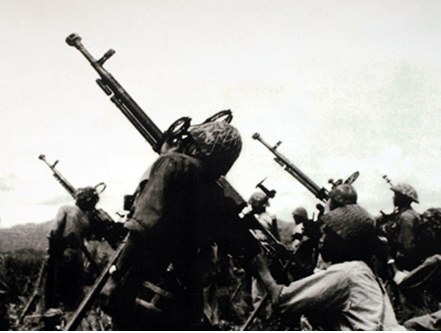
After 5 days of shooting, the French had lost all 3 bases of the Northern Sub-Sector; immediately, Vietnamese howitzers and anti-aircraft guns advanced into the Mường Thanh valley. Just 10 days after the attack, Vietnamese artillery had completely dominated both the Mường Thanh and Hồng Cúm airfields. Following hopeless efforts to counterattack and recapture the lost positions, and the sudden and effective appearance of Vietnamese 105 mm artillery, French generals realized that the Mường Thanh airfield could permanently no longer be used. From March 28, the French could only resupply the fortified complex by airdrops, and the Việt Minh troops, although newly acquainted with anti-aircraft machine guns and flak artillery, had become a terror to French and American pilots. During the first wave of attacks, 12 transport and fighter aircraft were shot down in the skies over Điện Biên Phủ.
Sau 5 ngày nổ súng, quân Pháp đã mất cả 3 căn cứ của phân khu Bắc, ngay lập tức lựu pháo và cao xạ của quân Việt Nam tiến vào cánh đồng Mường Thanh. Chỉ 10 ngày sau khi tấn công, pháo binh của Việt Nam đã khống chế hoàn toàn cả 2 sân bay Mường Thanh và Hồng Cúm. Sau những nỗ lực vô vọng nhằm phản công tái chiếm lại các vị trí đã mất và sự xuất hiện bất ngờ và hiệu quả của pháo 105mm Việt Nam, các tướng lĩnh Pháp đã thấy vĩnh viễn không còn sử dụng được sân bay Mường Thanh. Từ ngày 28 tháng 3, Pháp chỉ còn tiếp tế được cho tập đoàn cứ điểm bằng thả dù và bộ đội Việt Minh tuy mới làm quen với súng máy phòng không, pháo cao xạ đã trở thành nỗi kinh hoàng với phi công Pháp và Mỹ. Trong đợt tấn công đầu tiên, 12 máy bay vận tải, máy bay chiến đấu đã bị bắn rơi trên bầu trời Điện Biên Phủ.
The fatal weakness of French military logistics was exploited to the maximum by the Vietnamese troops; if they did not remedy it in time, the trend of defeat was inevitable. The sole reliance of the French military logistical line was organizing supply airdrops. On March 22, US President Eisenhower instructed the Chairman of the Joint Chiefs of Staff, Radford, to urgently resolve Navarre's requests. An airlift was established by the US from military bases in Japan, South Korea, Taiwan, and the Philippines, and then to the Cát Bi and Gia Lâm airfields, to transport goods and soldiers up to Điện Biên Phủ, rapidly meeting all the logistical demands of the French troops20.
Chỗ yếu chí tử của hậu cần quân Pháp đã bị bộ đội Việt Nam khai thác tối đa, nếu họ không kịp thời khắc phục thì xu thế thất bại là không tránh khỏi. Chỗ dựa duy nhất của tuyến hậu cần quân đội Pháp là tổ chức thả dù tiếp tế. Ngày 22 tháng 3, Tổng thống Mỹ Aixenhao chỉ thị cho Chủ tịch hội đồng tham mưu trưởng liên quân Rátpho phải giải quyết cấp tốc các yêu cầu của Nava. Một cầu hàng không được Mỹ thiết lập từ các căn cứ quân sự Nhật Bản, Nam Triều Tiên, Đài Loan, Philíppin rồi đến các sân bay Cát Bi, Gia Lâm để chở hàng hóa và bình sỹ lên Điện Biên Phủ, đáp ứng nhanh chóng mọi yêu cầu tiếp vận của quân Pháp20.
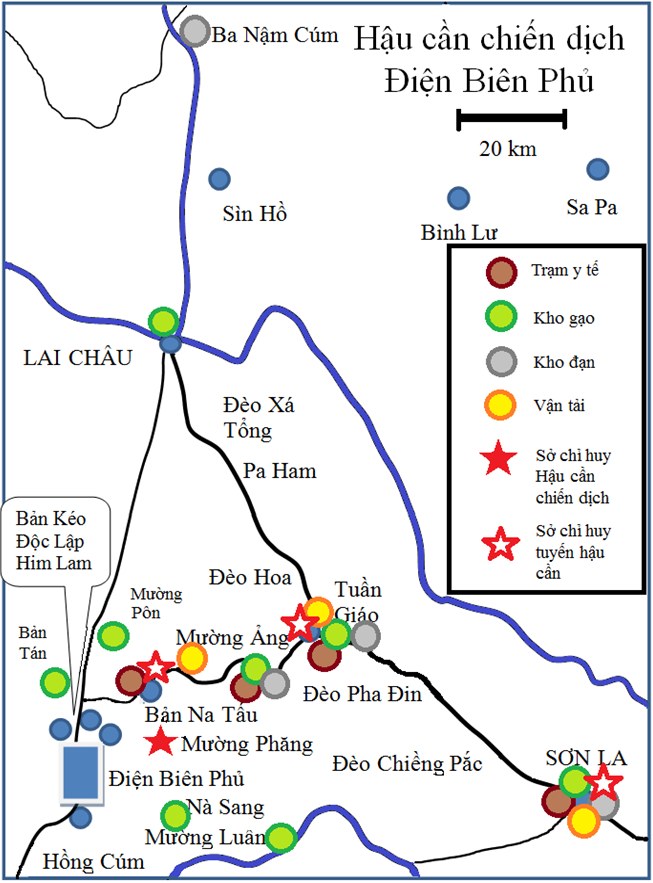
For their part, the French forces were also determined to seize the initiative. They resolved to strike at the fatal weakness on the Vietnamese logistical line – the single solitary road leading into the Điện Biên Phủ battlefield. At this point, all efforts to camouflage the road had become unnecessary. With total mastery of the airspace, aerial reconnaissance clearly revealed the entire transport line of the Vietnam People's Army; the French - American coalition concentrated all the forces at their disposal to attack this road, with the focus on crucial geographical "chokepoints" such as the Cà pass, Khế pass, Mỏ Thổ, Pha Đin, Cò Nòi... Navarre ordered the air force to "give priority with all maximum means to supporting our forces in the Northwest. Concentrate on striking transport and communications, especially transport trucks heading towards the Northwest"30.
Về phía mình, quân Pháp cũng quyết dành thế chủ động. Họ quyết đánh vào điểm yếu chí tử trên tuyến hậu cần Việt Nam – đó là con đường độc đạo dẫn vào trận địa Điện Biên Phủ. Lúc này mọi cố gắng nguỵ trang cho con đường đã trở nên không cần thiết. Hoàn toàn làm chủ không phận, trinh sát không quân cho thấy rõ toàn tuyến vận chuyển của quân đội Nhân dân Việt Nam, liên quân Pháp - Mỹ tập trung mọi lực lượng có trong tay để tấn công con đường này, trọng tâm là những “yết hầu” địa lý quan trọng như đèo Cà, đèo Khế, Mỏ Thổ, Pha Đin, Cò Nòi... Nava đã ra lệnh cho không quân “dành ưu tiên với mọi phương tiện tối đa cho việc hỗ trợ các lực lượng của chúng ta ở Tây Bắc. Tập trung vào việc đánh phá giao thông vận tải, đặc biệt là các ô tô vận tải hướng lên Tây Bắc”30.
Executing Navarre's orders, the French Air Force Command deployed a plan to strike key transport routes. Paul Ély provided the daily tonnage of bombs dropped by the French air force on a number of key points as follows:
Thực hiện mệnh lệnh của Nava, Bộ chỉ huy không quân Pháp triển khai kế hoạch đánh phá các tuyến đường giao thông vận tải quan trọng. Pôn Ely đưa ra số lượng bom không quân Pháp oanh tạc mỗi ngày ở một số trọng điểm như sau:
- Ego (Tuần Giáo - Điện Biên): 13 tons.
- Êgơ (Tuần Giáo - Điện Biên): 13 tấn.
- Méphisto (Lai Châu - Sơn La): 17 tons.
- Mêphít (Lai Châu - Sơn La): 17 tấn.
- Brutus (Cò Nòi - Yên Bái): 14 tons.
- Brutút (Cò Nòi - Yên Bái): 14 tấn.
- Bayard (Cò Nòi - Yên Bái): 31 tons.
- Baya (Cò Nòi - Yên Bái): 31 tấn.
Tens of tons of bombs were continuously dropped day and night onto narrow stretches of road, stretching for dozens of kilometers, precariously clinging to a cliff on one side and an abyss on the other, where just a rockslide or a road collapse cutting off traffic created formidable challenges for the traffic assurance forces. From January 1954 onwards, the bombardments of the road system leading to Điện Biên Phủ grew increasingly fierce. In one engagement, the French used up to 39 B-26 bombers, 5 Privateers, and 21 Navy fighter aircraft to drop hundreds of tons of bombs...20. After every ferocious bombardment, the road segments were battered to pieces. Troops and civilian porters had to build detours, causing the topography of the route to change daily. In just the first two months of 1954, the observation team on the Cò Nòi road segment had to redraw the road map 19 times34.
Hàng chục tấn bom liên tục ném xuống ngày đêm vào những cung đường nhỏ hẹp, kéo dài vài chục km, cheo leo một bên là vách đá, bên kia là vực thẳm, chỉ cần đá lở hay đường sụt là giao thông bị cắt đã tạo ra những thử thách ghê gớm với lực lượng bảo đảm giao thông. Từ tháng 1 năm 1954 trở đi, các cuộc oanh tạc hệ thống đường dẫn đến Điện Biên Phủ ngày càng ác liệt. Có trận, quân Pháp dùng tới 39 máy bay B-26, năm máy bay Privateer và 21 máy bay khu trục thuộc Hải quân ném hàng trăm tấn bom...20. Sau mỗi đợt oanh tạc dữ dội, các cung đường bị phá tan nát. Bộ đội và dân công phải làm đường vòng, khiến cho địa hình tuyến đường thay đổi hàng ngày. Chỉ trong hai tháng đầu 1954, tổ quan sát trên đoạn đường Cò Nòi đã phải vẽ lại sơ đồ con đường 19 lần34.
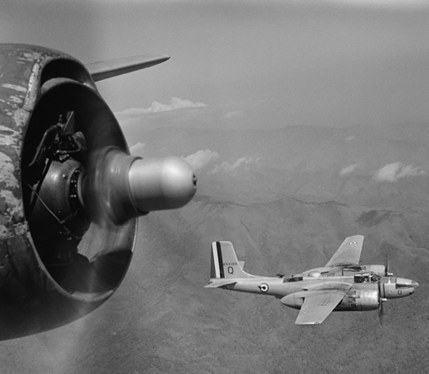
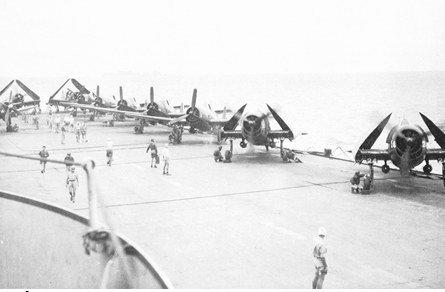
The French military brought to the Gulf of Tonkin 2 aircraft carriers, La Fayette and Arromanches, each carrying dozens of F6F Hellcat and SB2C combat aircraft to reinforce the capabilities of the Cát Bi (Hải Phòng) and Bạch Mai (Hà Nội) airfields, directly participating in the bombing of Điện Biên Phủ. By March, the US delivered 25 F-4AU1 aircraft to replace the exhausted French planes. The number of bombers throughout Indochina originally consisted of 48 B-26 bombers, 8 Privateer bombers, and 112 Hellcat, Bearcat, and Corsair fighter-bombers. The initial total of 156 aircraft eventually increased to 2271. More than two-thirds of the aforementioned aircraft (over 90 military transport aircraft and 175 bombers) were directly commanded by General Dechaux to provide support for Điện Biên Phủ. On average, between 75 to 80 bombers were dedicated to this front every day. At the same time, almost all American military transport aircraft and Packet transports were also mobilized for transport to Điện Biên Phủ. Transport for other fronts was almost exclusively handled by civilian aircraft.
Quân đội Pháp đưa đến Vịnh Bắc Bộ 2 tàu sân bay La Fayette và Arromanches, mỗi tàu chở theo hàng chục máy bay chiến đấu F6F Hellcat và SB2-C để tăng cường năng lực cho sân bay Cát Bi (Hải Phòng) và Bạch Mai (Hà Nội), trực tiếp tham gia đánh phá Điện Biên Phủ. Đến tháng 3, Mỹ đưa đến 25 máy bay F-4AU1 để thay cho các máy bay Pháp đã kiệt sức. Số lượng máy bay ném bom toàn Đông Dương từ đầu có 48 máy bay ném bom B26, 8 ném bom Privateer và 112 oanh tạc cơ chiến đấu Hellcat, Beercat và Corsair. Tổng số 156 chiếc cuối cùng đã tăng lên tới 227 chiếc1. Hơn hai phần ba số máy bay trên (hơn 90 máy bay vận tải quân sự và 175 oanh tạc cơ) do tướng Dechaux trực tiếp chỉ huy để yểm trợ cho Điện Biên Phủ. Trung bình mỗi ngày, từ 75 tới 80 chiếc máy bay ném bom được dành cho mặt trận này. Cùng lúc đó, gần như tất cả những máy bay vận tải quân sự và vận tải loại Packet của Mỹ cũng được huy động vận chuyển cho Điện Biên Phủ. Việc vận tải cho những mặt trận khác hầu như chỉ do máy bay dân sự đảm nhiệm.
On March 24, 30 78-seat C-119 aircraft belonging to the American Civil Air Transport (CAT) airline, founded by Major General Claire Lee Chennault, head of the "Flying Tigers" during World War II, and operated by American military experts, began to be mobilized to drop napalm bombs on peripheral targets at Điện Biên Phủ27. Each aircraft carried 9 crates, with each crate containing 90 napalm canisters. This type of weapon was intended not only to inflict brutal casualties but also to cause devastating forest fires to expose heavily camouflaged positions.
Ngày 24 tháng 3, 30 máy bay C-119 78 chỗ ngồi của hãng Hàng không vận tải dân dụng Mỹ (CAT) do thiếu tướng Claire Lee Chennault, người đứng đầu đội “phi hổ” trong chiến tranh Thế giới 2 thành lập và các chuyên gia quân sự Mỹ điều hành bắt đầu được huy động để ném bom napal xuống các mục tiêu ngoại vi Điện Biên Phủ27. Mỗi máy bay mang 9 thùng, mỗi thùng chứa 90 bình napan. Loại vũ khí này không chỉ nhằm sát thương tàn bạo mà còn gây những đám cháy rừng tàn khốc để bộc lộ các vị trí được nguỵ trang kín đáo.
In addition to demolition bombs and penetration bombs to destroy roads, many types of special bombs were used to thwart repair operations, such as butterfly bombs camouflaged among the forest trees to inflict casualties on combat engineers, Henliphơlít bombs containing thousands of extremely sharp hooks to cause leg injuries and puncture tires, and delayed-action bombs with varied timers to prevent repairs... French experts also researched creating artificial rain using silver iodide to cause road collapses before the rainy season arrived31.
Ngoài bom phá, bom khoan để phá đường, nhiều loại bom đặc biệt được dùng để cản phá các hoạt động sửa chữa như bom bươm bướm ngụy trang lẫn trong cây rừng để sát thương công binh, bom Henliphơlít chứa hàng ngàn lưỡi câu thật sắc gây vết thương chân và chọc thủng bánh xe, bom nổ chậm với thời gian khác nhau để ngăn sửa chữa... Các chuyên gia Pháp còn nghiên cứu làm mưa nhân tạo bằng chất iốt bạc để tạo làm sụt lở đường xá trước khi mùa mưa đến31.
Because food supplies had to be continuously transported from the rear every day along a single long axis with 40 traffic points that could be cut off1, the asymmetrical war between the Vietnamese forces and the French-American air forces was incredibly fierce. Throughout the campaign, American and French aircraft conducted 1,186 strikes, on the peak day mobilizing 250 sorties of bombers to strike the transport routes of the Vietnamese army.
Do lương thực cung cấp phải liên tục vận chuyển từ hậu phương hàng ngày trên trục đường kéo dài độc đạo với 40 điểm giao thông có thể bị cắt đứt1, cuộc chiến không cân sức giữa lực lượng Việt Nam và không quân Pháp-Mỹ diễn ra rất ác liệt. Suốt chiến dịch, máy bay Mỹ Pháp đánh 1.186 trận, ngày cao nhất huy động 250 lần/chiếc máy bay ném bom đường giao thông của quân đội Việt Nam.
Right in the rear lines, bombers dominated the Giàng pass to block the road returning from Cao Bằng, and struck the Khế pass to block the road from Thái Nguyên to Tuyên Quang. Particularly at the Cà pass, French aircraft and artillery bombarded continuously for 40 days and nights to sever the road coming down from Lạng Sơn. On the campaign line, passes like Lũng Lô and Pha Đin (receiving up to 160 bombs on some days), and traffic hubs like Cò Nòi (up to 300 bombs a day) and Tuần Giáo became targets of fierce bombardment2629.
Ngay ở tuyến hậu phương, máy bay ném bom khống chế đèo Giàng để chặn đường từ Cao Bằng về, đánh đèo Khế chặn đường Thái Nguyên sang Tuyên Quang. Đặc biệt ở đèo Cà, máy bay và pháo binh Pháp đánh phá liên tục suốt 40 ngày đêm để chặt đứt con đường từ Lạng Sơn xuống. Trên tuyến chiến dịch, các đèo Lũng Lô, Pha Đin (có ngày 160 quả bom), các đầu mối giao thông Cò Nòi (có ngày 300 quả bom), Tuần Giáo trở thành trọng điểm đánh phá ác liệt2629.
In late March 1954, President Hồ Chí Minh went directly to inspect and encourage the Youth Volunteers and civilian porters who were holding their ground at the Khế pass. To protect transportation, 50% of the front's meager anti-aircraft forces (consisting of two 37 mm anti-aircraft artillery battalions and several 12.7 mm anti-aircraft machine gun companies) were deployed at anti-aircraft emplacements along the transport route. Four combat engineer battalions and tens of thousands of civilian porters clung to the roads day and night to overcome the aftermath of the enemy's bombardments29. At the bombing chokepoints, there were observation posts operating around the clock tasked with counting the number of dropped bombs and marking the locations of delayed-action bombs, alongside specialized bomb disposal units and dedicated road repair squads.
Cuối tháng 3 năm 1954, Chủ tịch Hồ Chí Minh đi trực tiếp kiểm tra động viên thanh niên xung phong và dân công đang trụ bám ở đèo Khế. Để bảo vệ giao thông, 50% lực lượng phòng không ít ỏi của mặt trận (gồm hai tiểu đoàn pháo cao xạ 37 mm, một số đại đội súng máy cao xạ 12,7 mm) được bố trí tại các trận địa bắn máy bay dọc theo tuyến đường vận tải. Bốn tiểu đoàn công binh và hàng vạn dân công ngày đêm bám đường khắc phục hậu quả đánh phá của địch29. Ở các trọng điểm ném bom đều có đài quan sát suốt ngày đêm làm nhiệm vụ đếm số bom thả và đánh dấu vị trí bom nổ chậm, có các đơn vị chuyên phá bom và bộ phận chuyên sửa đường.